Every Dog Should Be Muzzle Trained. (Yes! EVERY dog.)
If you see a dog wearing a muzzle, what’s the first thought that pops into your head?
For most people, it’s: “That dog must be dangerous.”
But that couldn’t be further from the truth.
In reality, muzzle training is one of the most responsible, proactive, and compassionate things you can do for your dog. A properly muzzle-trained dog is safer in training, safer around children, safer on outings, and safer at the vet or groomer. It’s a tool that keeps everyone—including your dog—protected and stress-free.
Muzzles Are About Safety, Not Shame
Dogs use their mouths for everything: exploring, playing, communicating, grabbing, and yes—sometimes making choices that aren’t in their best interest. A muzzle simply adds a layer of safety while you work on the underlying behavior.
A muzzle-trained dog can:
Navigate training sessions with less risk.
Safely interact with kids while learning proper boundaries.
Enjoy outings without the worry of grabbing or eating things.
Handle stressful environments, like vet visits or grooming appointments, far more comfortably.
The muzzle isn’t a punishment. It’s a seatbelt.
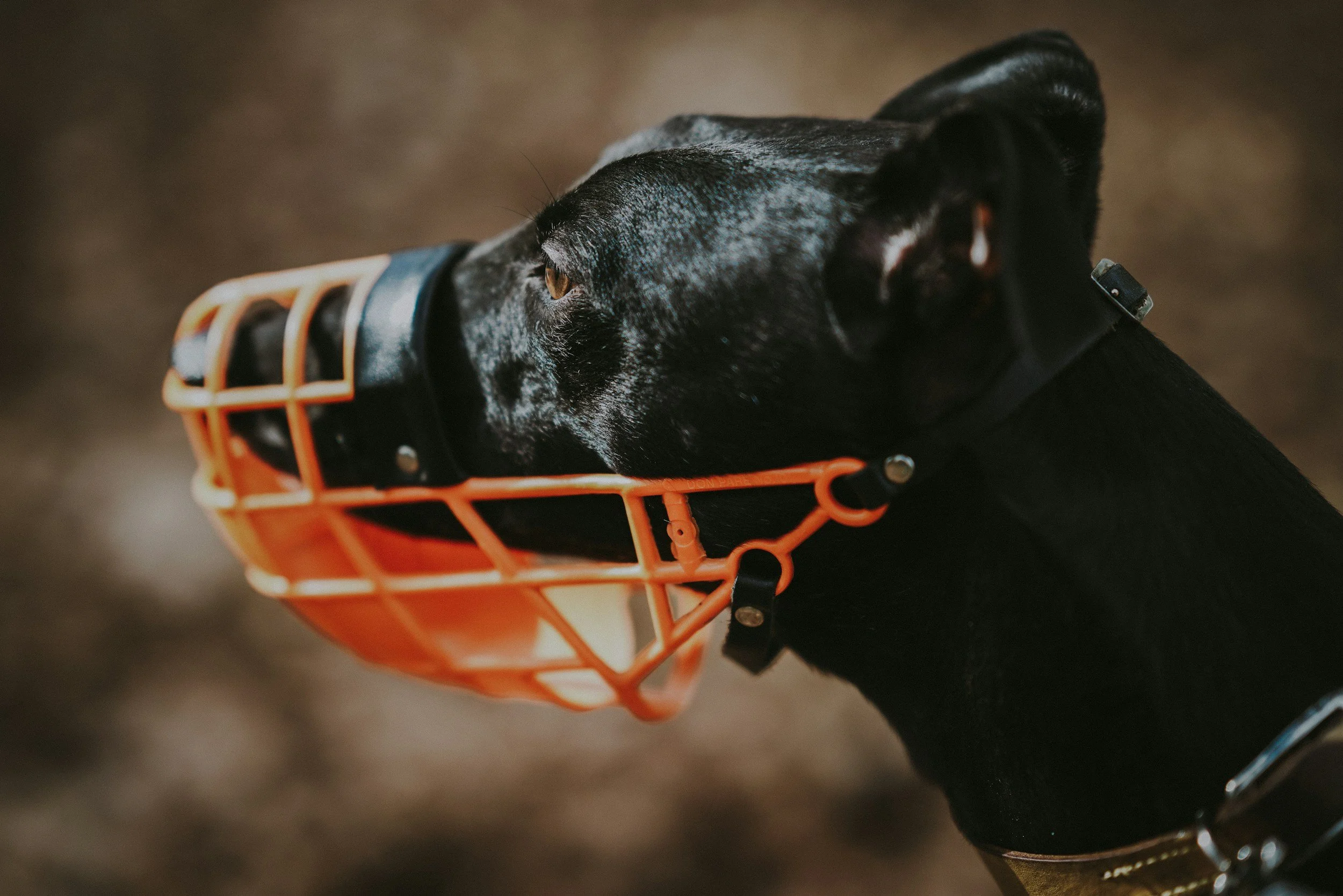
Pica, Poop Eating, and “Walking Vacuum Cleaners”
If you’ve ever lived with a dog who insists on eating everything (including poop), you know it’s stressful, expensive, and dangerous.
Ingestion can lead to stomach upset, parasites, blockages, and even surgery.
A muzzle allows you to:
Prevent dangerous snacking.
Avoid medical emergencies.
Work on impulse control without the panic that your dog will swallow something harmful during training.
You get peace of mind, and your dog stays safe.
When Reactivity Is Part of the Picture
If you’re working with a reactive dog—especially around other dogs—a muzzle can be the difference between a training session and an emergency.
Muzzles:
Reduce the risk of injury in unexpected moments.
Allow you to train with more confidence.
Create safer opportunities for controlled exposure and skill-building.
Using a muzzle here isn’t an admission of defeat. It’s an investment in your dog’s future behavior.
Vet Visits and Grooming Become Easier for Everyone
Even the sweetest dogs can become overwhelmed at the vet or groomer. Tight spaces, strange equipment, and unfamiliar handling can make any dog uncomfortable.
A muzzle:
Helps staff do their jobs safely.
Allows your dog to receive necessary care without added restraint.
Prevents fear-based nips or bites that could set back progress.
You get the haircut you want. Your dog gets the care they need. And everyone stays safe.
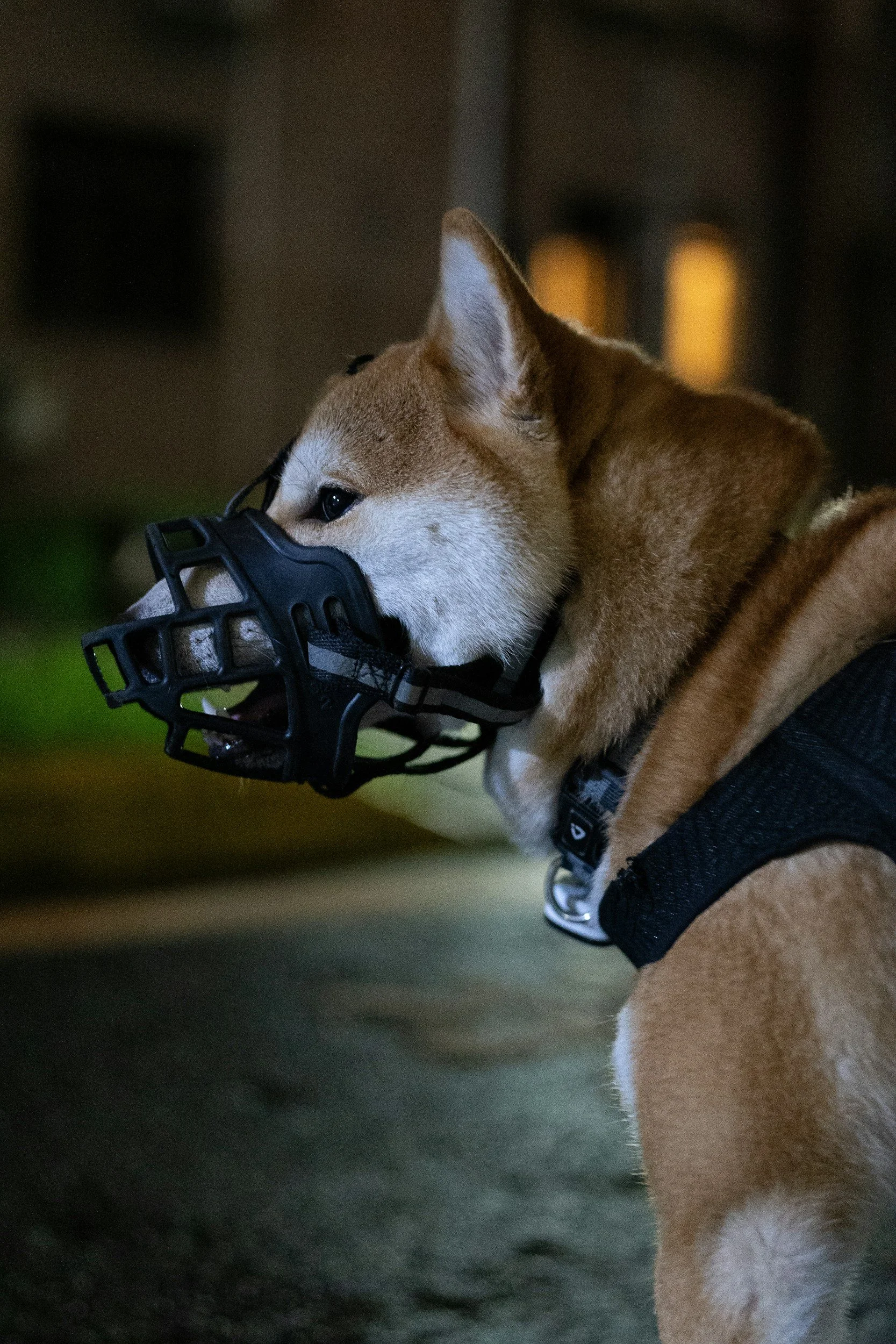
A Helpful Tool at Home, Too
Introducing your dog to babies or small children can be nerve-wracking. Dogs and kids should never be left alone together, but a muzzle adds a crucial buffer while your dog is learning what’s appropriate around little ones.
Using a muzzle during these early interactions:
Reduces stress for everyone involved.
Helps the dog understand boundaries.
Allows you to supervise from a calmer, clearer place.
It’s not because the dog is “bad.” It’s because you’re smart.
Choosing the Right Muzzle
Muzzles aren't one-size-fits-all. There are basket muzzles, plastic muzzles, loop muzzles, soft muzzles, and more.
At The Cordial Canine, we love:
JAFCO Clear Muzzles — They’re lightweight, allow plenty of airflow, and let us see the dog’s expression. We want to know how tense their mouth is, how much they’re panting, how stressed they are. That information matters.
Mia’s Muzzles — These are designed with extra pant room, making them perfect for dogs who are working, training, or just more easily stressed. If your dog needs space to pant while running or during exposure work, these are fantastic.
The right muzzle should:
Allow full panting.
Fit securely without rubbing.
Give the dog space to take treats (in most models).
Make your dog feel comfortable, not constrained.
Party Hats, Not Punishment
Around here, we lovingly refer to muzzles as party hats.
Why? Because our dogs have learned that when the muzzle comes out, fun things happen—training, adventures, games, outings.
A muzzle should be a positive predictor, not a point of shame.